
瞿昆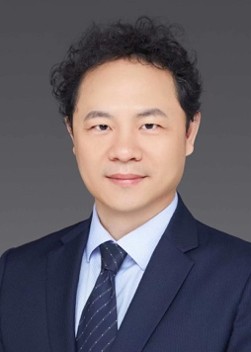
个人主页:https://qulab.ustc.edu.cn
地址:中校区医学楼308、西区科技楼1118
主要研究方向:
(1)面向全景数字生命的人工智能算法开发与数据智能解析;
(2)新型组学技术开发与高通量多模态多尺度生命数据获取;
(3)数据驱动的虚拟细胞构建和基础生命过程的建模与预测;
(4)人工智能在解析癌症等重大疾病的诊断和治疗中的应用。
个人简介:
中国科学技术大学国际合作与交流部部长兼港澳台办公室主任,人工智能与数据科学学院、生命科学与医学部讲席教授、博士生导师。2016年获国家创新人才青年基金,2021年获国家杰出青年基金(交叉学部)。长期致力于通过多学科交叉融合的方式,开展AI for Life Science研究:发展新型单细胞组学技术与大数据智能解析算法,构建多模态数据驱动的数字与虚拟细胞模型,探索基础生命过程的模拟与预测,为解析癌症、自身免疫性疾病等和重大疾病的发生发展机制、加速药物研发和推动精准诊疗提供新思路与新方法。在Nature、Nature Methods、Cell、Cancer Cell等学术期刊上共发表论文80余篇,Google学术引用超过17000次,总影响因子超过1400,H-index 55。
招生招聘:
实验室热忱欢迎对AI for Science感兴趣的本科生前来攻读博(硕)士学位或到实验室实习;长期招聘人工智能、计算机、统计、数学、生物信息学等相关背景的博士后和特任(副)研究员,待遇从优。
教育和研究经历:
2021.06-至今 中国科学技术大学港澳台办公室主任
2020.08-至今 中国科学技术大学国际合作与交流部部长
2019-2020年 中国科学技术大学国际合作与交流部副部长(主持工作)
2026.11-至今 中国科学技术大学人工智能与数据科学学院,讲席教授,博士生导师
2025.11-至今 中国科学技术大学生命科学与医学部,讲席教授,博士生导师
2022.06-至今 合肥综合性国家科学中心人工智能研究院,资深研究员
2018.12-至今 中国科学技术大学附属第一医院,教授,博士生导师
2018-2024年 中国科学技术大学大数据学院,教授,博士生导师
2016-2025年 中国科学技术大学生命科学与医学部,教授,博士生导师
2010-2016年 美国斯坦福大学医学院,历任生物信息研究员、高级研究员、中心主任
2009-2010年 美国希望之城,贝克曼癌症研究中心,生物信息学专家
2004-2010年 美国印第安纳大学化学系,获物理化学博士学位
1999-2004年 中国科学技术大学化学物理系,获学士学位
教授课程:
1. 生物信息学
代表性学术成果:(*共同一作, #共同通讯)
[1] Jun Lin*, Chunpeng Chen*, Shouzhen Li#, et al, Chuangdong Cheng#, Aihui Tang#, Kun Qu#, “Multi-omics analysis characterizes the spatial architecture of glioblastoma ecosystems”, Nature Neuroscience, 2026
[2] Shuyan Wang*, Hao Xu*, et al, Kun Qu#, “Denoising spatial epigenomic data via deep matrix factorization”, Nature Computational Science, 2026
[3] Xuyuan Gao*, Ke Liu*, Songwen Luo*, et al Chuang Guo#, Kun Qu#, “Comparative analysis of methodologies for detecting extrachromosomal circular DNA”, Nature Communications, 2024.
[4] Yinlei Hu*, Siyuan Wan*, Yuanhanyu Luo*, et al, Falai Chen#, Bin Li#, Kun Qu# “Benchmarking algorithms for single-cell multi-omics prediction and integration”, Nature Methods, 2024
[5] Hao Xu*, Shuyan Wang*, et al, Bin Li#, Jun Lin#, Kun Qu# “SPACEL: deep learning-based characterization of spatial transcriptome architectures”, Nature Communications, 2023.
[6] Qiaoni Yu*, Xu Liu*, Jingwen Fang*, Huihui Wu*, et al, Zhikai Wang#, Kun Qu# “Dynamics and regulation of mitotic chromatin accessibility bookmarking at single-cell resolution”, Science Advances, 2023.
[7] Bin Li*, Wen Zhang*, Chuang Guo*, et al, Kun Qu# “Benchmarking spatial and single-cell transcriptomics integration methods for transcript distribution prediction and cell type deconvolution”, Nature Methods, 2022.
[8] Xianwen Ren*, Wen Wen*, Xiaoying Fan*, et al, Bing Su#, Zheng Zhang#, Kun Qu#, Xiaoqun Wang#, Jiekai Chen#, Ronghua Jin#, Zemin Zhang# “COVID-19 immune features revealed by a large-scale single cell transcriptome atlas”, Cell, 2021.
[9] Qian Liu*, Lisa C. Zaba*, et al, Kun Qu# & Howard Y. Chang# “Chromatin accessibility landscapes of skin cells in systemic sclerosis nominate dendritic cells in disease pathogenesis”, Nature Communications, 2020.
[10] Chuang Guo*, Bin Li*, et al, Tengchuan Jin#, Jun Lin# & Kun Qu# “Single-cell analysis of two severe COVID-19 patients reveals a monocyte-associated and tocilizumab-responding cytokine storm”, Nature Communications, 2020.
[11] Haohuan Xie*, Wen Zhang*, Mei Zhang*#, et al, Kun Qu# & Tian Xue# “Chromatin accessibility analysis reveals regulatory dynamics of developing human retina and hiPSC-derived retinal organoids”, Science Advances, 2020.
[12] Kun Qu*, Lisa C. Zaba*, et al, Youn H. Kim# and Howard Y. Chang# “Chromatin accessibility landscape of cutaneous T cell lymphoma and dynamic response to HDAC inhibitors”, Cancer Cell, 2017.
[13] Kun Qu*, Sara Garamszegi*, Felix Wu*, et al Jill P Mesirov# “Integrative genomic analysis by interoperation of bioinformatics tools in GenomeSpace”, Nature Methods, 2016.
[14] Kun Qu*, Lisa C. Zaba*, Paul G. Giresi, et al Howard Y. Chang# “Individuality and variation of personal regulomes in primary human T cells”, Cell Systems, 2015.
[15] Yue Wan*#, Kun Qu*, et al Howard Y. Chang# “Landscape and variation of RNA secondary structure across the human transcriptome”, Nature, 2014.